Drone Defence
The New Drone Defence Stack - PART 2
Why Counter-Drone Defence Is Becoming a Command-and-Control Problem
Why Counter-Drone Defence Is Becoming a Command-and-Control Problem
As governments and defence organisations deploy more technologies to detect drones, a second challenge is becoming increasingly important: how to combine information from different systems quickly enough to create a useful operational picture.
The counter-UAS industry has spent years developing better ways to detect small unmanned aircraft. Radar systems have become more capable of identifying small aerial targets. RF technologies can identify signals associated with drones and controllers. Electro-optical systems can provide visual confirmation, while acoustic and other specialist technologies can add further layers of detection.
These capabilities have significantly improved drone awareness. They have also created a new operational challenge.
A protected site may now have several systems capable of observing the same incident, along with existing cameras, perimeter security, access control and communications infrastructure. Each system generates information differently and may be operated through its own interface.
For the person responsible for security, the important question is increasingly what all of those systems are saying together.
The counter-UAS market is becoming a systems integration market
Consider what might happen when an unidentified drone approaches a military installation.
One sensor identifies an aerial object. Another detects an RF signal. A camera captures movement near the perimeter. An existing security system reports unusual activity elsewhere at the site.
Each piece of information may be valuable. Its operational value increases substantially when those observations can be correlated in time and location.
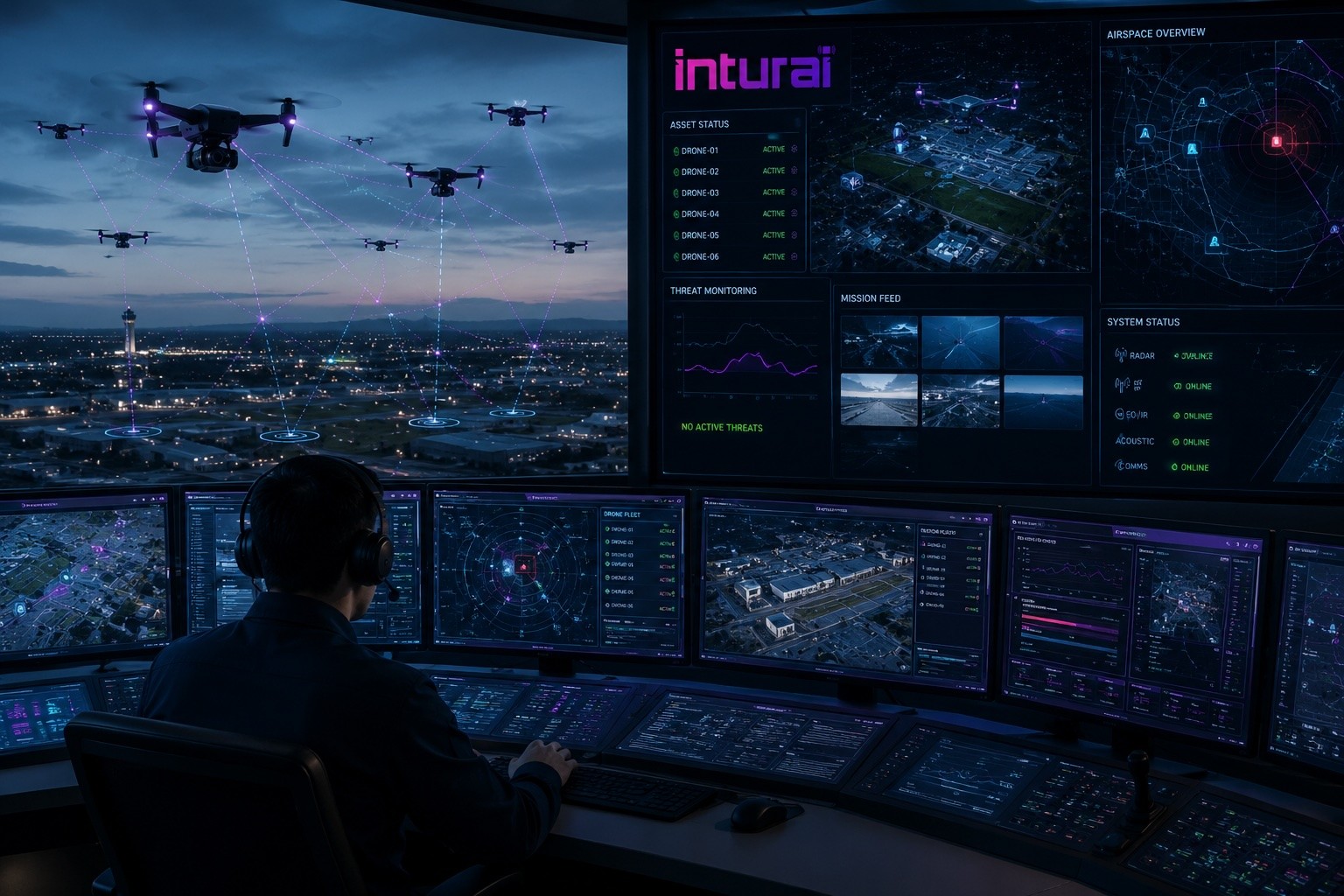
This is the role that command-and-control platforms are beginning to play within modern counter-UAS architectures. Rather than requiring personnel to monitor separate technologies independently, a C2 platform can bring information together and help establish a common operational picture.
The difference is significant because identifying the presence of an object represents one stage of the security process. Operators still need to understand its behaviour, establish context, assess the available information and determine what authorised response is appropriate.
Recent defence programs suggest that governments are increasingly thinking about counter-UAS capability in these terms.
Canada and Australia are testing integrated counter-UAS systems
Canada's 2026 Counter-Uncrewed Aerial Systems Sandbox brings technology companies together with the Canadian Armed Forces, U.S. government counter-UAS experts, the RCMP and defence scientists. The program is designed to test technologies under realistic conditions and examine how they can contribute to operational counter-UAS requirements.
Canada's approach is particularly relevant because future counter-UAS technologies are expected to operate within broader military command environments. This places interoperability alongside detection performance as an important consideration.
Australia is moving in a similar direction through Project LAND 156. During the Australian Defence Force's ICARUS counter-drone demonstration, a command-and-control system was integrated with multiple sensors and other technologies to evaluate a layered approach to drone defence.
These programs provide an indication of how the counter-UAS market is developing. Defence customers are still interested in better sensors, but they also need those sensors to function as components of a larger system.
No single sensor can provide complete drone awareness
The requirement for integration follows from the technical realities of drone detection.
Radar can provide valuable information about aerial movement, but performance depends on factors including target size, environment and configuration. RF detection can provide important information when relevant signals are present, while autonomous systems and changing communications methods can reduce the usefulness of some RF approaches. Optical systems can provide confirmation but depend on line of sight and environmental conditions.
These technologies are therefore complementary.
A layered architecture can combine their strengths while reducing reliance on any individual method. It can also allow new sensing technologies to be incorporated as the threat evolves.
This is particularly important because drone technology is changing quickly. Systems increasingly incorporate greater autonomy, different communications methods and new navigation techniques. Counter-UAS infrastructure designed around one fixed detection method risks becoming less effective as those technologies evolve.
How Inturai upgrades the counter-UAS stack
The combination of Inturai and DomeCommand is relevant to this emerging architecture because the two capabilities address different parts of the information chain.
Inturai develops RF sensing technologies designed to extract information about activity within an environment. DomeCommand provides command-and-control capabilities intended to integrate multiple inputs and present information within a common operational environment.
This creates the potential for Inturai sensing to operate alongside radar, cameras and other third-party security technologies rather than requiring an organisation to replace existing infrastructure.
For airports, military facilities, energy infrastructure and other protected sites, that distinction matters. Many already have substantial investment in security systems. The practical requirement is frequently to improve the intelligence available from the wider environment and connect information that currently exists in separate systems.
The C2 layer becomes the point at which those systems can begin working as an ecosystem.
NATO is putting interoperability at the centre of counter-UAS development
NATO's recent counter-UAS activity reinforces this direction.
The Alliance has been conducting experimentation on its eastern flank involving drones, counter-drone technologies, unmanned ground vehicles and next-generation communications. The objective includes finding ways to integrate emerging technologies into existing military forces at a much faster pace.
NATO's Layered Counter-UAS Initiative is similarly examining interoperability, real-time UAS and counter-UAS operations, and command coordination.
These programs address an issue that will become more significant as defence spending on drones increases. Every new sensor or countermeasure added to an installation potentially creates another source of information. Without an effective integration layer, operators can end up with more technology and greater complexity at the same time.
Command and control provides a way to manage that complexity.
The next phase of the counter-UAS market is therefore likely to involve a combination of better detection, better integration and faster interpretation of information. For technology providers, interoperability could become as strategically important as the performance of an individual sensor.
For Inturai and DomeCommand, that creates an opportunity to participate in a part of the counter-UAS stack that becomes increasingly valuable as the number of sensors and systems grows: the layer that connects sensing with operational understanding.
Part 3 examines the scale of investment now flowing into this market and why NATO and Canada's drone strategies could create significant opportunities for integrated C2 platforms.
PRE-READ:
The New Drone Defence Stack - Part 1
FULL SERIES:
The New Drone Defence Stack - Part 1
The New Drone Defence Stack - Part 2
The New Drone Defence Stack - Part 3
The New Drone Defence Stack - Part 4